Visual Prompts · Journal
Translate one idea across materials
Paper, embroidery, clay and glass are not filters; each material brings its own structural rules.
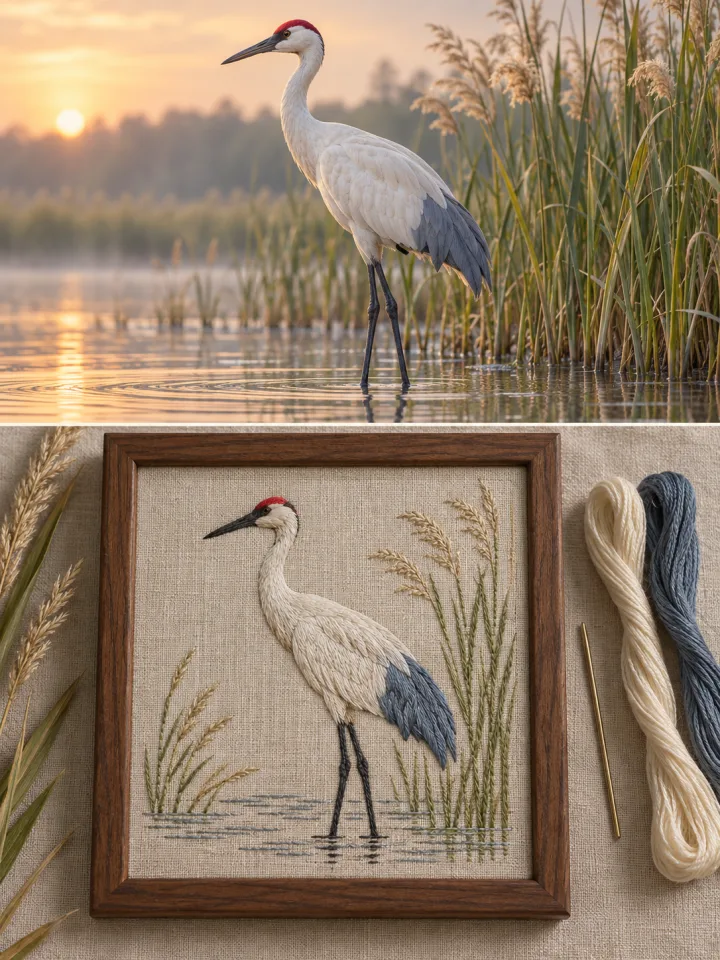
Extract the central relationship
Keep what matters in the subject: a river crossing a city, a bird positioned against water, or an object being used. Sketch that relationship before choosing a material. Otherwise the result is only a texture applied to the original image.
Let craft constraints shape composition
Embroidery has stitch direction, thread density and ground fabric. Paper has cut edges, folds and interlayer shadow. Clay has thickness, gravity and fired surfaces. State how these constraints change shape and detail, not merely that an image should “look embroidered.”
Preserve recognition
The subject or relationship should remain identifiable after translation. Review material credibility and subject clarity together. If dense detail obscures the idea, remove motifs rather than adding more explanation.
Separate simulation from manufacture
An AI image can simulate a craft appearance, but it cannot prove the result can be stitched, cut or fired. Physical production requires separate checks for specifications, process, dimensions and cost.
A real material translation changes how the image is built, not just its surface.